Project Summary
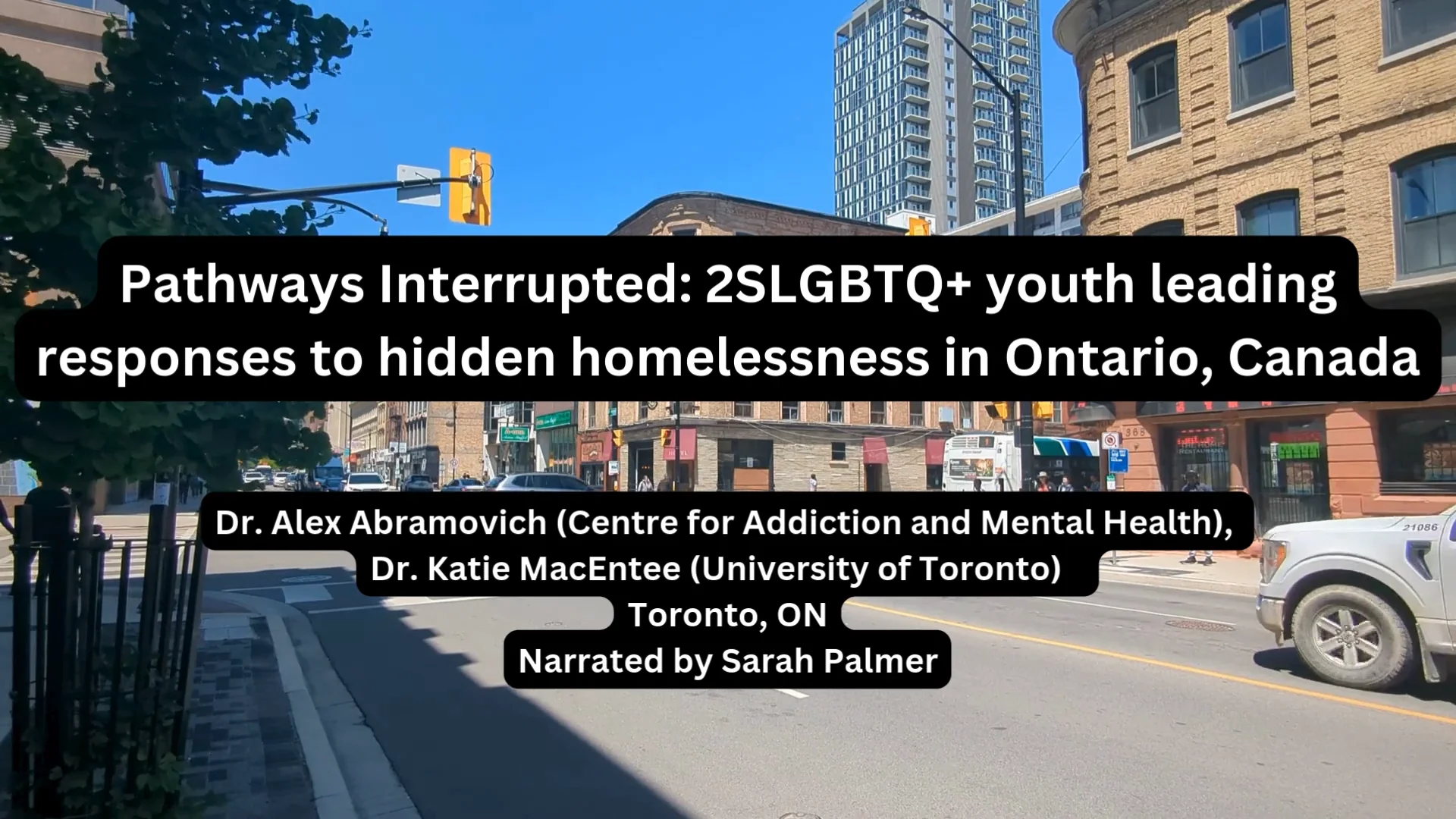
The Pathways project used innovative participatory visual methods to center the involvement of 2SLGBTQ+ youth experiencing hidden homelessness (e.g., staying at a motel/hotel, with a friend, family, sexual/romantic partner, couch surfing) across three sites (Toronto, York Region, London, Ontario) in a critical examination of Ontario’s youth homelessness response.
This project involved 4-phases:
- Mapping Phase – Environmental scans and key informant interviews were conducted to help map the youth homelessness responses in each site.
- Cellphilm Phase – 2SLGBTQ+ youth with lived experience of hidden homelessness were engaged in the creation of cellphilms (short videos made using mobile technology) about hidden homelessness and in one-on-one interviews. A final film that highlights the cellphilms of all participants across each site was created for a large film screening event at the end of the project.
- Screening Phase – Cellphilms were screened to targeted audiences of key stakeholders across the project sites, followed by focus groups with each audience.
- Integration and Action Phase – Knowledge mobilization products were created and shared with the public and with key government and community stakeholders to improve strategies for preventing hidden homelessness.
Publications
Abramovich, A., Segui, J., Palmer, S., Elkington, N., Silberberg, M., & MacEntee, K. (2026) Visibilizing hidden homelessness: A youth participatory action research study with 2SLGBTQ+ youth in Ontario, Canada. International Journal on Homelessness,6(2), 1-24. DOI: https://doi.org/10.5206/ijoh.2026.2.24016